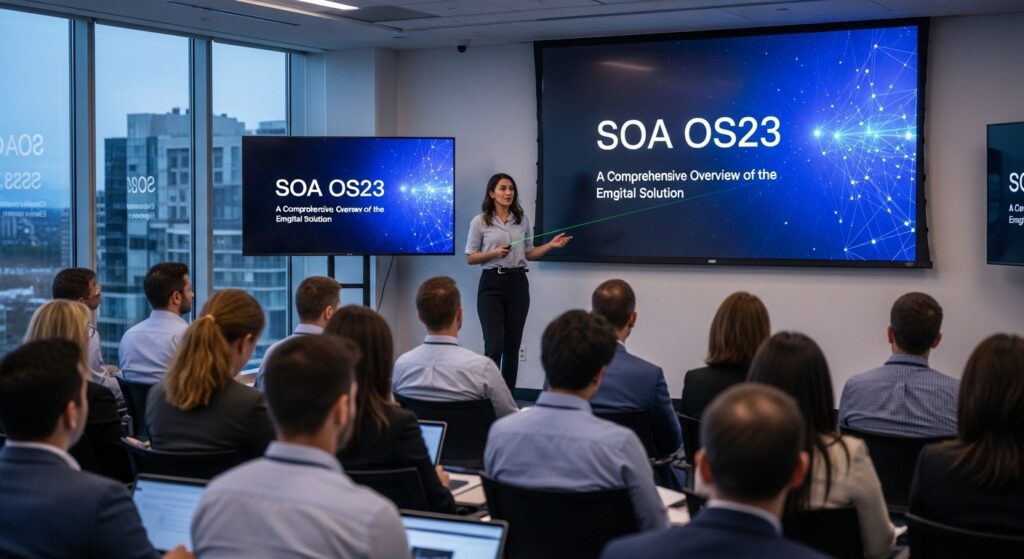
Modern software systems are becoming more complex as organizations depend on digital platforms for almost every business process. Traditional application structures often struggle to handle rapid growth new technologies and constant integration needs. Because of this challenge developers and enterprises are moving toward flexible architectures that allow software systems to evolve without major disruptions. One modern concept gaining attention in technology discussions is SOA OS23p.
This architectural approach focuses on building applications as collections of independent services rather than one large system. Each service performs a specific task and communicates with other services through standardized interfaces. This design improves scalability flexibility and system stability. By breaking complex systems into manageable components organizations can develop update and deploy services more efficiently.
The concept of SOA OS23p reflects modern development practices that combine service oriented architecture with microservices principles cloud technologies and strong security frameworks. Businesses that adopt this approach can create systems that respond quickly to changing requirements while maintaining reliable performance. This article explains how the architecture works its main features its advantages and the industries that benefit from its implementation.
What Is SOA OS23p Architecture
The architecture known as SOA OS23p represents a modern framework that organizes software into independent services. Each service focuses on a specific function such as user authentication payment processing or data retrieval. Instead of running everything inside one large program services communicate through defined application programming interfaces.
Traditional software often uses a monolithic structure where all components operate inside a single application environment. When one part of the system changes developers must update the entire application which increases complexity and risk. Service oriented structures solve this issue by separating functionality into smaller modules that operate independently.
Within the SOA OS23p model developers can build update and scale services individually. This modular structure allows teams to modify one component without affecting others. Because of this independence systems become easier to maintain and improve over time.
Another important characteristic of the architecture involves interoperability. Services built using different programming languages or frameworks can communicate through standardized protocols. This flexibility enables organizations to combine new applications with existing systems while maintaining consistent functionality.
Core Principles Behind The Architecture
The architecture follows several guiding principles that shape how services interact and operate within a system. These principles support scalability security and operational efficiency.
One major principle involves modular design. Each service performs a specific function which prevents unnecessary dependencies between components. Modular systems are easier to update and maintain because developers can isolate changes without affecting the entire application.
Another principle is standardized communication. Services exchange information through clearly defined APIs which ensures compatibility between different systems and technologies. These interfaces make integration easier when organizations connect internal systems with external platforms.
Security also plays a central role. Modern service architectures include authentication validation and encryption mechanisms that protect data during communication. These features help prevent unauthorized access and maintain system integrity.
Observability is another important concept. Monitoring tools allow developers to analyze system behavior identify performance issues and maintain reliability across distributed services.
Key Features Of SOA OS23p
The architecture offers a set of features that improve system development management and performance. These capabilities make it suitable for complex enterprise environments.
One major feature is modular service structure. Applications are divided into small services that perform specialized tasks. Each service operates independently which allows development teams to update components quickly without affecting other parts of the system.
Another key feature is API based communication. Services interact through standardized interfaces that allow systems to exchange data efficiently. API driven communication supports integration between applications built using different programming languages.
Cloud compatibility represents another essential capability. Modern systems often run in cloud environments where resources must scale dynamically. The architecture supports containerized deployment which allows services to run efficiently in distributed environments.
Monitoring capabilities also play a critical role. Built in observability tools allow developers to track system performance analyze logs and identify operational problems quickly. This improves troubleshooting and helps maintain service reliability.
Security mechanisms form another important feature. Authentication validation and encrypted communication protect services from unauthorized access. Strong security frameworks ensure that sensitive data remains protected across distributed systems.
How SOA OS23p Works In Software Systems
Understanding how the architecture operates requires examining the interaction between services within the system environment. Each service functions as an independent module responsible for completing a specific task.
When a user or application sends a request the system directs the request to the appropriate service. That service processes the request performs the required operation and returns the result through an API response. Because services remain isolated from one another failures in one component rarely affect the rest of the system.
Communication between services typically occurs through web based protocols. These communication methods allow systems to exchange structured data in a standardized format that different technologies can interpret.
Service orchestration tools coordinate interactions between multiple services. These tools manage workflows that involve several components working together to complete complex operations. By coordinating services effectively organizations ensure smooth system behavior across distributed environments.
Monitoring tools track performance metrics logs and system traces. These insights help development teams understand how services behave under different workloads and identify issues before they affect users.
Advantages Of Adopting Service Based Architecture
Organizations that adopt service oriented architectures gain several operational benefits that improve both development speed and system reliability.
One major advantage involves faster development cycles. Because services operate independently development teams can build and deploy new features without modifying the entire system. This reduces development time and allows companies to respond quickly to market demands.
Another advantage is improved system resilience. Fault isolation ensures that problems within one service do not cause widespread system failures. When errors occur developers can fix individual services without shutting down the entire platform.
Integration capabilities represent another benefit. Many organizations operate legacy systems alongside modern applications. Service oriented architecture allows these systems to communicate through standardized interfaces which preserves existing technology investments.
Scalability also becomes easier. Services can scale individually depending on demand which improves resource utilization and maintains consistent performance during high traffic periods.
Operational flexibility represents another benefit. Organizations can introduce new technologies gradually without rebuilding their entire infrastructure.
Real World Applications Of SOA OS23p
Service oriented architectures appear in many industries where complex digital systems require reliability scalability and integration.
Enterprise technology environments often use this architecture to connect multiple business applications. Large organizations rely on interconnected systems for finance logistics customer management and analytics. Service based designs allow these systems to communicate while remaining independent.
Healthcare systems benefit from modular architectures that enable secure exchange of patient information. Hospitals diagnostic laboratories and insurance platforms require reliable data sharing across multiple systems.
Internet of things applications also rely on distributed services to process data from connected devices. Sensors machines and smart devices generate large amounts of information that must be processed efficiently.
Financial technology platforms require secure integration between banking systems payment services and regulatory platforms. Service based architectures support these interactions while maintaining high security standards.
Manufacturing environments use digital systems to manage production equipment inventory tracking and supply chain operations. Modular architectures allow factories to integrate automation systems with business applications.
Future Trends In Service Oriented Architecture
Technology continues to evolve which means architectural frameworks must adapt to emerging innovations. Several trends are shaping the future development of service oriented systems.
Artificial intelligence integration is becoming increasingly important. Intelligent systems can analyze service interactions predict performance issues and automate operational tasks. This improves system efficiency and reduces manual management.
Blockchain technology also influences distributed system design. Decentralized networks provide secure verification methods that strengthen trust within digital ecosystems.
Edge computing represents another trend. Processing data closer to its source reduces latency and improves performance for applications such as connected devices and real time analytics.
Standardization efforts continue improving interoperability between services. As industries adopt consistent communication protocols integration between platforms becomes easier.
These trends suggest that architectures like SOA OS23p will continue evolving to support advanced technologies and distributed computing environments.
What is SOA OS23p architecture
SOA OS23p architecture is a service based software framework that divides applications into independent modules. Each module performs a specific function and communicates with other services through standardized interfaces.
Why is SOA OS23p important for modern software systems
The architecture improves scalability flexibility and integration capabilities. Organizations can update services independently which simplifies development and system maintenance.
Can SOA OS23p integrate with existing legacy systems
Yes the architecture supports integration with older technologies through standardized communication protocols and middleware connectors. This allows organizations to modernize infrastructure gradually.
Which industries benefit from SOA OS23p architecture
Industries such as healthcare finance manufacturing enterprise technology and internet of things systems benefit from modular architectures that support scalable and secure digital platforms.
Does SOA OS23p support cloud environments
Yes the architecture is designed to operate efficiently in cloud based environments. Services can run in containers and scale dynamically according to workload demands.
Conclusion
Modern organizations require software systems that can adapt quickly to technological change and growing digital demands. Traditional monolithic architectures often struggle to support these requirements because they limit scalability flexibility and integration capabilities.
Service oriented frameworks provide a solution by dividing applications into independent services that communicate through standardized interfaces. This modular design improves system reliability simplifies maintenance and enables organizations to introduce new technologies without major disruptions.
The architecture known as SOA OS23p represents a modern interpretation of these principles combined with cloud compatibility strong security frameworks and advanced monitoring capabilities. By adopting this approach businesses can create digital systems that respond efficiently to evolving operational needs.
As industries continue embracing digital transformation service based architectures will remain essential for building scalable secure and adaptable software platforms. Organizations that implement modern frameworks such as SOA OS23p will be better prepared to manage complex technology ecosystems and support future innovation.